



Most companies enter new markets the same way... strategy sessions coupled with research, surveys, spreadsheets, and perhaps a bit of founder or executive intuition.
HOKA is telling a different story. Travis Wiseman (global head of partnerships) and Thomas Cykana (global head of lifestyle product) told me a story that I frankly like much more. They didn't wake up one morning and decide to become a lifestyle brand.
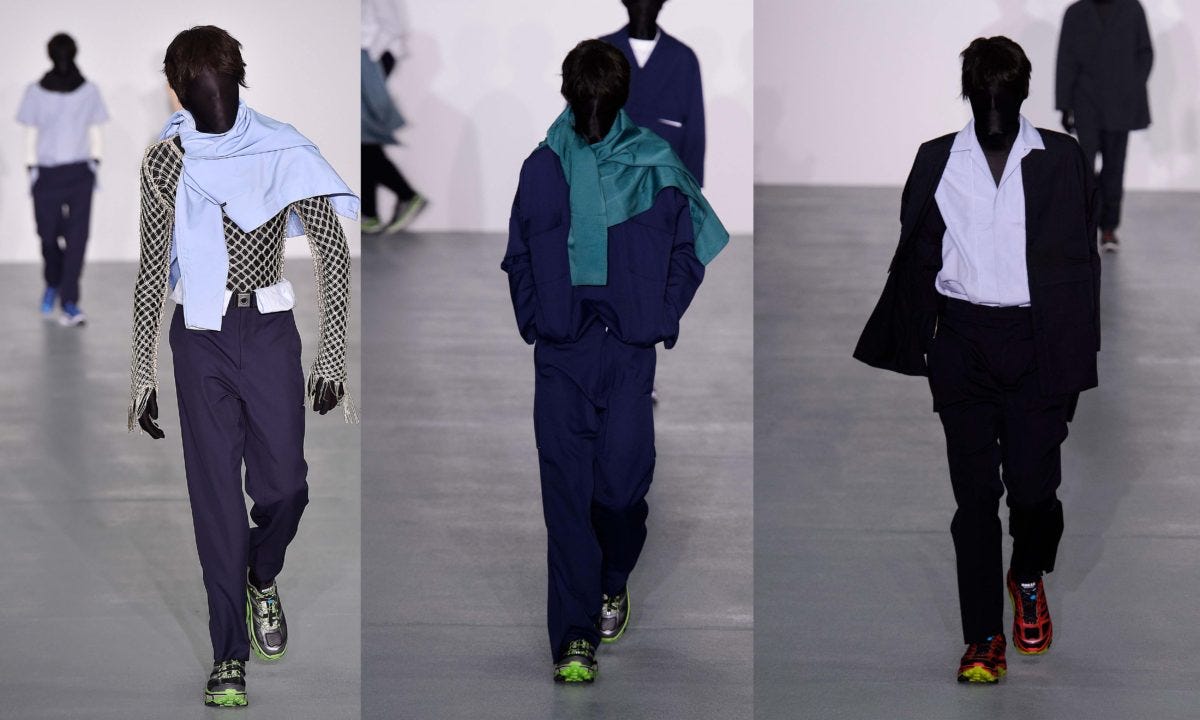
Fashion discovered HOKA first. Kiko Kostadinov put HOKA on the runway at his 2016 Central Saint Martins graduation show. The audience started wearing running shoes outside of running. HOKA simply paid attention and built around this unexpected new type of demand.
But they're smart. They didn't cash in on lifestyle to the detriment of their performance brand. They put a guardrail in place: no "toy shoes."
They aren't building precious lifestyle products. They're evolving their performance portfolio and collaborating with brands like UNNA and BEAMS.
Their assumption is that the average consumer doesn't fully understand the difference between a performance shoe and a lifestyle shoe. Or maybe they just don't care. The design and colorway speak to them either way.
If someone buys a collaboration, there's a good chance they'll run in it.
So every shoe still has to earn its place as a HOKA.
That's a very different philosophy than chasing a new category.
This isn't a story about the best strategic thinker in the room discovering a new opportunity. It's a story about listening to customers and following them with a clear sense of purpose.
The strongest brands don't abandon what made them successful to enter a new market. They carry those principles with them.
That's a much harder way to grow. It also might be why HOKA has succeeded where so many others haven't.